Tell us about yourself and your artistic journey.
I’m Iee Damo, and this is the first time I’m calling myself an artist — both exciting and nerve-racking. I make “artistic objects” that sit between sculpture and product, acting as devices connecting reality and the unconscious. My practice began as a way to visualise thoughts and emotions I couldn’t explain in words. The Reptilian Eyewear project was the first piece I completed and shared, even knowing it wasn’t perfect. It taught me there’s no such thing as perfect — and that the process can be more valuable than the final result.
What’s the story behind the piece you’re sharing with us?
The idea of “reptilian” intrigued me for its sense of otherness — a space between seriousness and play. I wanted the work to spark small shifts in perception, to make someone question how they see themselves or their world.
How does the QR code street exhition format shape your approach to the viewer’s experience?
Because the work is accessed through a QR code, it begins with a decision: to scan or not. That small moment of choice is part of the piece, turning a passing encounter into something intentional and personally meaningful.
With our exhibition theme in mind, when did you last get wonderfully lost—in a city, a thought, or your studio?
I often feel like I’m drifting like gathering fragments of thought and letting them rearrange until they form something whole. That wandering is essential to my process; discovery often happens when nothing is forced.
If your art could speak, what would it say to passersby?
“Even if you walk past, your unconscious has already seen me. One day, in an unexpected form, it will return. The ripple has begun.”
Tell us about yourself and your artistic journey.
I’m Iee Damo, and this is the first time I’m calling myself an artist — both exciting and nerve-racking. I make “artistic objects” that sit between sculpture and product, acting as devices connecting reality and the unconscious. My practice began as a way to visualise thoughts and emotions I couldn’t explain in words. The Reptilian Eyewear project was the first piece I completed and shared, even knowing it wasn’t perfect. It taught me there’s no such thing as perfect — and that the process can be more valuable than the final result.
What’s the story behind the piece you’re sharing with us?
The idea of “reptilian” intrigued me for its sense of otherness — a space between seriousness and play. I wanted the work to spark small shifts in perception, to make someone question how they see themselves or their world.
How does the QR code street exhition format shape your approach to the viewer’s experience?
Because the work is accessed through a QR code, it begins with a decision: to scan or not. That small moment of choice is part of the piece, turning a passing encounter into something intentional and personally meaningful.
With our exhibition theme in mind, when did you last get wonderfully lost—in a city, a thought, or your studio?
I often feel like I’m drifting like gathering fragments of thought and letting them rearrange until they form something whole. That wandering is essential to my process; discovery often happens when nothing is forced.
If your art could speak, what would it say to passersby?
“Even if you walk past, your unconscious has already seen me. One day, in an unexpected form, it will return. The ripple has begun.”
Tell us about yourself and your artistic journey.
I’m Iee Damo, and this is the first time I’m calling myself an artist — both exciting and nerve-racking. I make “artistic objects” that sit between sculpture and product, acting as devices connecting reality and the unconscious. My practice began as a way to visualise thoughts and emotions I couldn’t explain in words. The Reptilian Eyewear project was the first piece I completed and shared, even knowing it wasn’t perfect. It taught me there’s no such thing as perfect — and that the process can be more valuable than the final result.
What’s the story behind the piece you’re sharing with us?
The idea of “reptilian” intrigued me for its sense of otherness — a space between seriousness and play. I wanted the work to spark small shifts in perception, to make someone question how they see themselves or their world.
How does the QR code street exhition format shape your approach to the viewer’s experience?
Because the work is accessed through a QR code, it begins with a decision: to scan or not. That small moment of choice is part of the piece, turning a passing encounter into something intentional and personally meaningful.
With our exhibition theme in mind, when did you last get wonderfully lost—in a city, a thought, or your studio?
I often feel like I’m drifting like gathering fragments of thought and letting them rearrange until they form something whole. That wandering is essential to my process; discovery often happens when nothing is forced.
If your art could speak, what would it say to passersby?
“Even if you walk past, your unconscious has already seen me. One day, in an unexpected form, it will return. The ripple has begun.”
Signal Station
Signal Station
Artist Interview
Artist Interview
How to be reptilian : Conscious Override Unit
LEE DAMHO
How to be reptilian : Conscious Override Unit
How to be reptilian : Conscious Override Unit

LEE DAMHO
LEE DAMHO
Description
Description
AI-generated digital rendering, displayed on screen
2048 x 2048 px (PNG file)
2025
AI-generated digital rendering, displayed on screen
2048 x 2048 px (PNG file)
2025
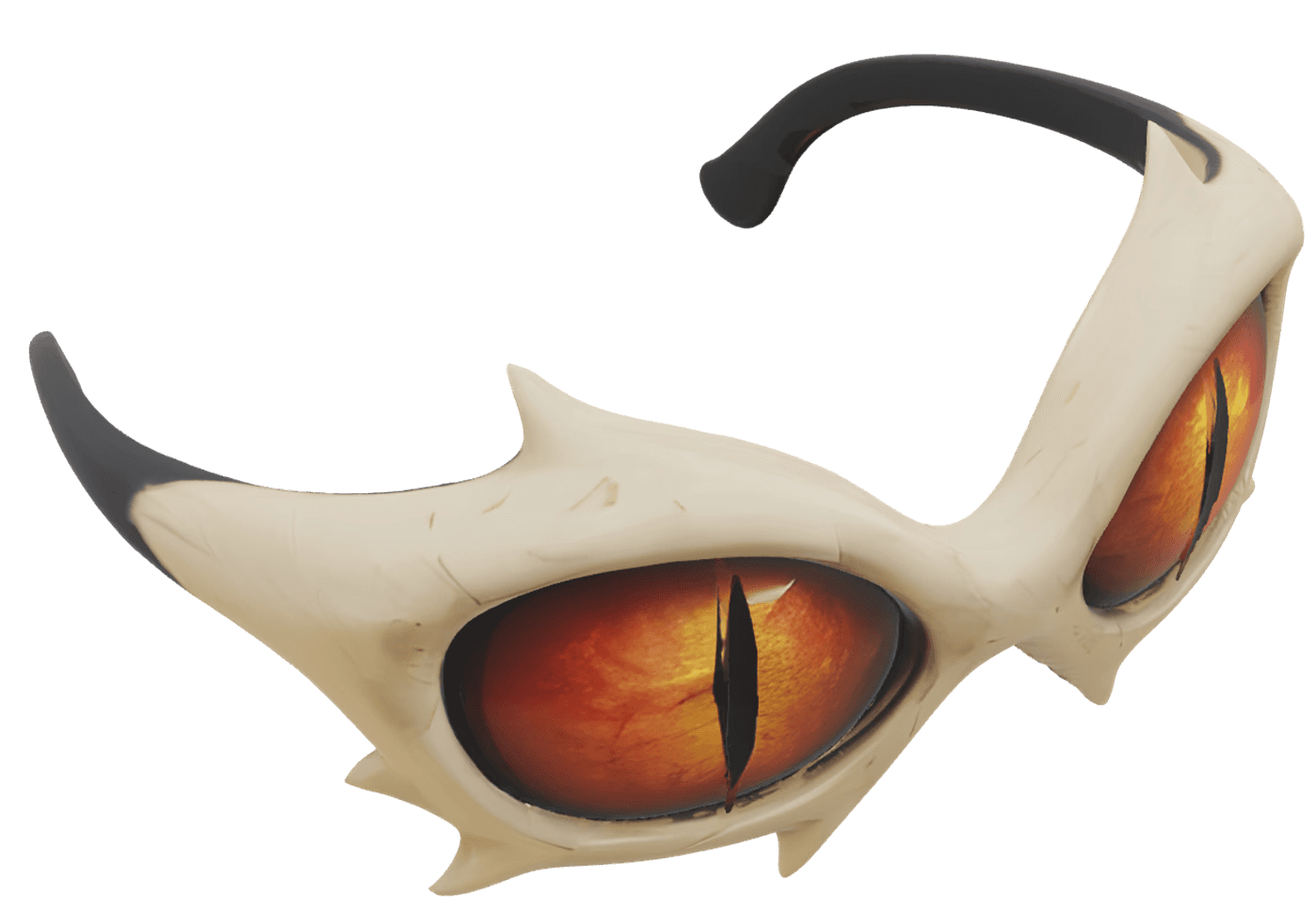
Displayed through a screen-based interface, How to be Reptilian: Conscious Override Unit functions as a speculative training device for perceptual transformation. Created using AI-generated design and digital manipulation, the work reimagines eyewear not as a tool for clarity, but as a disruptive interface—a ritual object that dismantles the human-centric gaze.
Inspired by reptilian vision systems and unconscious symbolism, its textured, asymmetric forms evoke a new sensory logic. The piece asks: What if the human way of seeing is the real disguise—an inherited lens shaped by culture, technology, and ideology?
Hovering between product, sculpture, and perceptual device, the work resists fixed meaning and invites a dérive of the senses—a slow, intuitive drift through unfamiliar modes of seeing. Rather than offering clarity, it floats. It looks back at the viewer, whispering suggestions that bypass logic and reach into the unconscious.
This is not a passive image, but an active threshold—one that destabilizes perception and reconfigures the act of seeing itself.
And once you override it, are you still yourself?
- Artist Note -
Artist Note
Reptilian Transition Training Device is a device designed to dismantle the ego and reconstruct consciousness by implanting new patterns of perception. As the wearer gradually loses their original sense of humanity, they are reconfigured into the perceptual system of an entirely different species.Functioning as an experimental interface that provokes doubt toward the very structure of sensation, the lenses reflect the self like mirrors, whisper commands like coded language, and slowly disassemble and rearrange the roles of vision, hearing, and emotion.This is a device that regulates the consciousness involved in the process of transformation— a threshold to crossing into a new state of being.
“Reality may be a structure of sensation shaped by the unconscious.”
This series reinterprets the object of eyewear as a <Conscious Override Unit>, intended to access and interfere with unconscious perception. Its forms were sculpted with inspiration from reptilian visual systems and skin, inviting the viewer to ask: “What changes the moment these glasses are put on?”
In myth, conspiracy, and symbolic systems, reptilians have long existed as hidden beings—masked, veiled, embedded. Rather than consuming that narrative as mere science fiction, this work turns the question inward: What if the human way of seeing is the real disguise? How often do we see the world through visions constructed by someone else? Is that gaze truly ours, or has it been installed?
This series does not concern itself with the eye, but with shifting the subject of sight itself. The act of seeing becomes a ritual of identity transformation. These are not accessories. They are devices that disturb the unconscious and rewrite perception.
The forms were developed through AI-generated design and refined through digital manipulation. Geometric horns, organic reptilian textures, and asymmetric forms reference symbolic images emerging from the unconscious.
This work is an attempt to sculpt what is unseen. The reptile—here—becomes a metaphor for primal instinct disguised as logic, a way of visualizing the hidden self beneath the conscious mask.
To wear these glasses is to choose to see. And this series asks:
Are you truly seeing the world through your own eyes? Once you wear this, are you still yourself?
Displayed through a screen-based interface, How to be Reptilian: Conscious Override Unit functions as a speculative training device for perceptual transformation. Created using AI-generated design and digital manipulation, the work reimagines eyewear not as a tool for clarity, but as a disruptive interface—a ritual object that dismantles the human-centric gaze.
Inspired by reptilian vision systems and unconscious symbolism, its textured, asymmetric forms evoke a new sensory logic. The piece asks: What if the human way of seeing is the real disguise—an inherited lens shaped by culture, technology, and ideology?
Hovering between product, sculpture, and perceptual device, the work resists fixed meaning and invites a dérive of the senses—a slow, intuitive drift through unfamiliar modes of seeing. Rather than offering clarity, it floats. It looks back at the viewer, whispering suggestions that bypass logic and reach into the unconscious.
This is not a passive image, but an active threshold—one that destabilizes perception and reconfigures the act of seeing itself.
And once you override it, are you still yourself?
Reptilian Transition Training Device is a device designed to dismantle the ego and reconstruct consciousness by implanting new patterns of perception. As the wearer gradually loses their original sense of humanity, they are reconfigured into the perceptual system of an entirely different species.Functioning as an experimental interface that provokes doubt toward the very structure of sensation, the lenses reflect the self like mirrors, whisper commands like coded language, and slowly disassemble and rearrange the roles of vision, hearing, and emotion.This is a device that regulates the consciousness involved in the process of transformation— a threshold to crossing into a new state of being.
“Reality may be a structure of sensation shaped by the unconscious.”
This series reinterprets the object of eyewear as a <Conscious Override Unit>, intended to access and interfere with unconscious perception. Its forms were sculpted with inspiration from reptilian visual systems and skin, inviting the viewer to ask: “What changes the moment these glasses are put on?”
In myth, conspiracy, and symbolic systems, reptilians have long existed as hidden beings—masked, veiled, embedded. Rather than consuming that narrative as mere science fiction, this work turns the question inward: What if the human way of seeing is the real disguise? How often do we see the world through visions constructed by someone else? Is that gaze truly ours, or has it been installed?
This series does not concern itself with the eye, but with shifting the subject of sight itself. The act of seeing becomes a ritual of identity transformation. These are not accessories. They are devices that disturb the unconscious and rewrite perception.
The forms were developed through AI-generated design and refined through digital manipulation. Geometric horns, organic reptilian textures, and asymmetric forms reference symbolic images emerging from the unconscious.
This work is an attempt to sculpt what is unseen. The reptile—here—becomes a metaphor for primal instinct disguised as logic, a way of visualizing the hidden self beneath the conscious mask.
To wear these glasses is to choose to see. And this series asks:
Are you truly seeing the world through your own eyes? Once you wear this, are you still yourself?
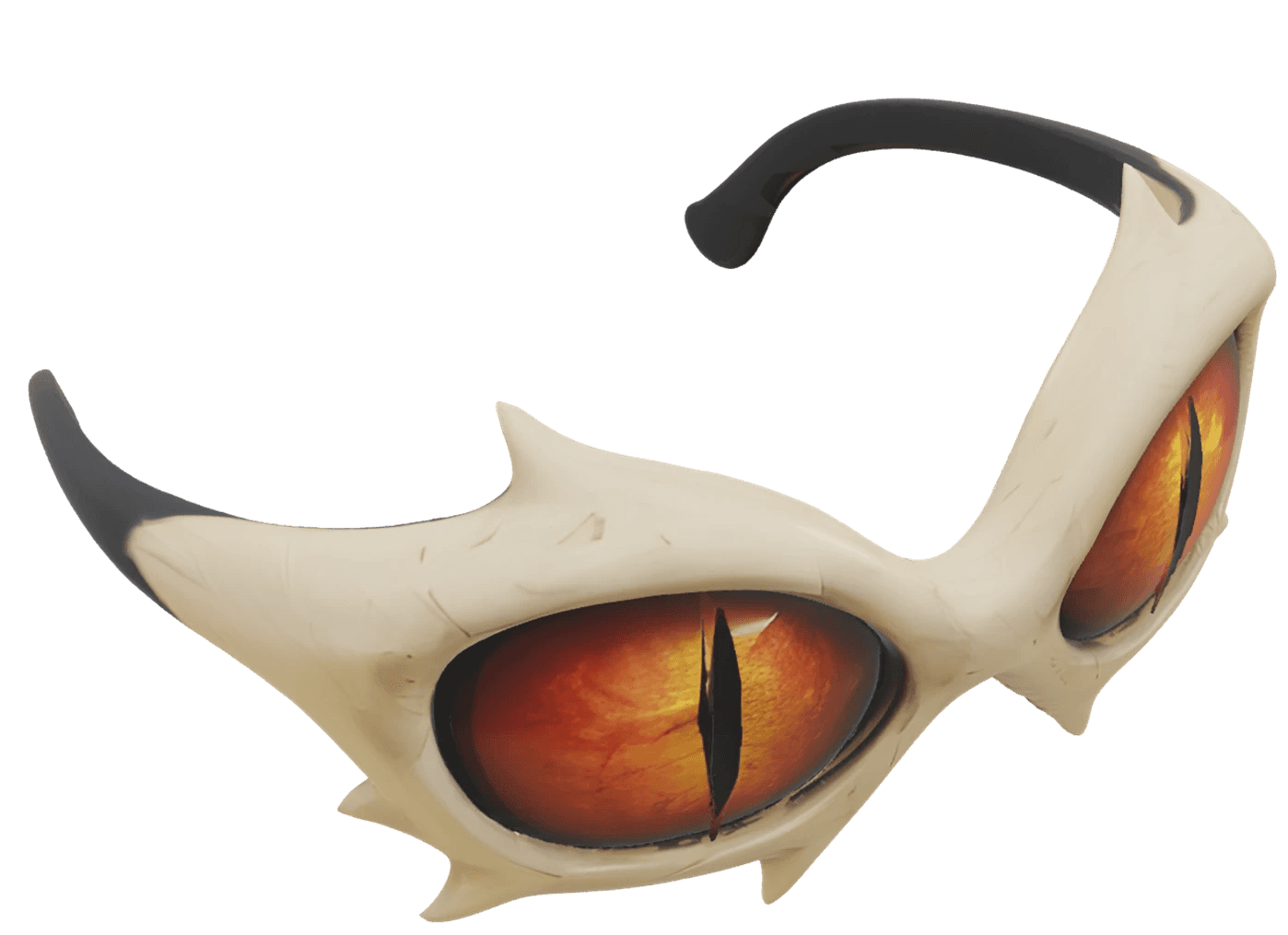
Click to try them on your face!